
Your customers are online right now, searching for solutions, comparing options, and making decisions. The question is not whether they will find a business like yours. It is whether they will find yours specifically. Paid advertising is how you make sure they do.
Paid ads are not about throwing money at a platform and hoping for results. They are a targetable, measurable, and scalable way to put your brand in front of a defined audience at the right stage of their buying journey, giving you control over who sees your message, when they see it, and what happens next. Global advertising spend crossed the trillion-dollar mark for the first time in 2025, reaching $1.14 trillion, with a further 7.1 percent increase forecast for 2026, because brands at every level are increasing what they spend on paid advertising for one reason: the returns justify it.
This guide covers everything you need to know: what paid advertising is, how it works, the main paid media channels available to you, the benefits for your business, and how to know whether your campaigns are actually performing.
Table of Contents
What Is Paid Advertising?
Paid advertising is any form of paid digital advertising where a business pays a platform to show its message to a specific audience. Whether that is a search ad, a social media campaign, or a display banner, the principle is the same: you pay for placement, and in return, you get control. The audience, the timing, and the budget are all yours to define.
What sets paid advertising apart is the precision and speed it gives you. You decide who sees your message, when they see it, and what you want them to do next. You can reach someone actively searching for exactly what you offer, or put your brand in front of a highly specific audience before they even know they need you. You set the budget, you track the results, and you adjust based on what the data tells you. That combination of control, measurability, and immediacy is what makes paid advertising one of the most powerful tools available to a growing business.
How Does Paid Advertising Support Your Digital Marketing Strategy?
A strong digital marketing strategy is rarely built on a single channel. SEO and content build long-term authority and compound in value over time. Paid advertising works alongside that foundation, filling the gaps that organic alone cannot always cover.
The most common gap is keyword competition. If you are targeting high-intent keywords where established competitors dominate the organic results, ranking quickly through SEO alone is difficult. Paid advertising gives you access to those keywords immediately, putting your business in front of people who are actively searching for what you offer, while your organic strategy builds in the background.
Search is also changing. Google’s introduction of AI Overviews has shifted how results are displayed, and ads within AI-generated search experiences are already being tested. Nobody knows exactly what search will look like in two or three years, but businesses that are invested in both organic and paid are better placed to adapt than those relying on one channel alone.
The most resilient marketing strategies combine SEO, content, and paid advertising, working together. Each channel supports the others, and together they give your business more ways to get found, more ways to convert, and more stability when any one channel shifts.
How Does Paid Advertising Work?
Most paid advertising platforms operate on an auction system. Every time someone searches a keyword or matches an audience profile, an auction runs instantly to determine which ads are shown and in what order. Here is how that process works in practice.
You Set Your Budget and Bid
You define how much you are willing to spend per day and the maximum amount you are willing to pay for a click. This tells the platform what you can compete for and ensures you never spend more than you have allocated.
The Platform Runs an Auction
According to Google, every time someone searches on Google or visits a site that shows ads, a lightning-fast ad auction takes place to determine which ads should show. Winning that auction is not simply about who bids the highest. Google evaluates six main factors, including your bid, the quality and relevance of your ad and landing page, and the context of the search itself. A well-structured campaign from a smaller advertiser can outrank a larger competitor spending more, simply by being more relevant.
Your Audience Is Defined by the Targeting You Set
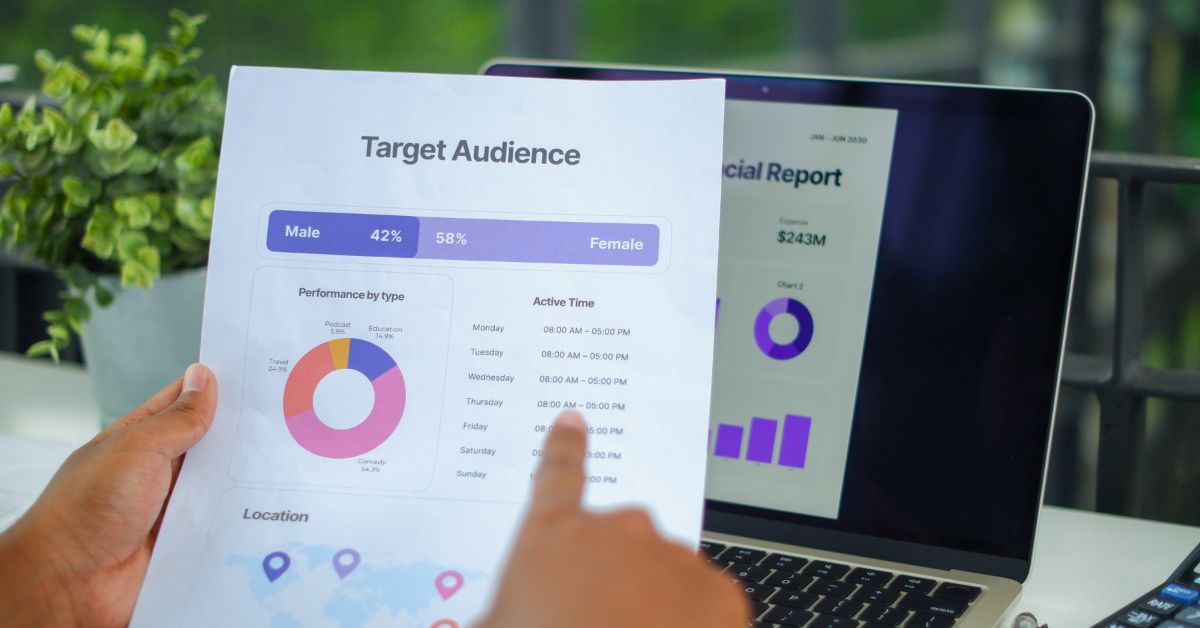
You choose who sees your ads based on location, age, interests, behaviour, search intent, job title, or even whether someone has visited your website before. This means your ads are not shown to a broad general audience. They are shown to the specific people most likely to need what you offer.
You Only Pay When Your Ad Delivers
The most common model for search and social ads is pay-per-click, meaning you are only charged when someone actually clicks on your ad. Other models charge per thousand impressions, which is more suited to brand awareness campaigns. Either way, every click, impression, and conversion is tracked so you know exactly what your budget is delivering.
You Monitor, Adjust, and Improve
Paid advertising is not something you set up and leave. Campaigns need ongoing monitoring of spend, cost per acquisition, click-through rates, and conversion data to perform at their best. The data your campaigns generate tells you what is working, what is not, and where to make adjustments to improve results over time.
What is equally important to understand is that paid advertising needs time to learn. Google’s own documentation confirms that campaigns using automated bidding strategies need time to optimise, typically one to two weeks, but sometimes up to six weeks. If significant changes are made to an existing campaign, Google recommends allowing a further one to two weeks for the campaign to stabilise and re-optimise. Looking at performance data too early can make results appear weaker than they actually are. Patience in the early stages is not passive; it is part of the strategy.
What Are the Main Paid Media Channels?
The main paid media channels are paid search, paid social, display advertising, and video advertising. Each works differently and suits different business goals, audiences, and budgets. The right channel for your business depends on who you are trying to reach, where they spend their time online, and what you want them to do. Here is what you need to know about each one.
1. Paid Search Advertising
Paid search advertising places your ad in front of people who are actively searching for what you offer. When someone types a query into a search engine, paid search ads appear at the top of the results page above all organic listings. Because the audience is already looking for a solution, paid search tends to drive high-intent traffic that converts well. A plumbing company bidding on “emergency plumber” is a simple example: the person searching has an immediate need, and a well-placed ad puts your business directly in front of them at that moment.
Google Ads or Microsoft Ads: Which Should You Use?
For the vast majority of businesses, Google Ads is the right choice. Google holds a 90 percent share of the global search engine market, which means your potential customers are searching there. That scale is unmatched, and it is where your budget will work hardest. Microsoft Ads serves ads across Bing, Yahoo, and AOL and does hold a portion of the desktop search market, particularly among older and more professionally oriented users. However, with a fraction of Google’s audience and generally lower search intent, it rarely delivers comparable returns for most businesses. Our recommendation is to start with Google Ads, build a well-optimised campaign, and let the data guide any decisions about expanding to additional platforms from there.
2. Paid Social Advertising
Paid social advertising places your brand in front of audiences on social media platforms based on who they are, rather than what they are searching for. Unlike paid search, where someone is actively looking for a solution, paid social reaches people within their feed, making it a powerful tool for building awareness, reaching new audiences, and staying visible throughout a longer buying journey. It also works well for retargeting people who have already visited your website or engaged with your content, and paid social campaigns can be structured to support every stage of the buying journey, from first awareness through to conversion.
The main platforms for paid social advertising are:
- Facebook and Instagram: The most widely used paid social platforms for consumer brands, e-commerce, and local businesses. Both are managed through Meta’s Ads Manager and suit businesses looking to build awareness and drive traffic at scale.
- LinkedIn: The go-to platform for B2B paid social advertising. It allows targeting by job title, seniority, industry, and company size, making it the most precise option for reaching business decision-makers.
- TikTok: A video-first platform that suits brands targeting younger audiences. It works best when the creative feels native to the platform rather than being produced like a traditional ad.

Which Social Media Platform Should You Advertise On?
Start with where your audience already spends their time. Consumer brands and local businesses typically start with Facebook and Instagram. B2B businesses targeting specific industries or roles get the most precision from LinkedIn. If your audience skews younger and your brand has strong visual content, TikTok is worth testing. For most businesses, starting with one platform and expanding based on performance data is more effective than spreading the budget across multiple channels at once. A consistent paid social marketing approach, even on a single platform, will always outperform an inconsistent presence across several.
3. Video Advertising
Video advertising is a form of paid digital advertising that delivers your message through video content to a targeted audience. If you want to reach your audience through video, YouTube is the most powerful platform available to you. With billions of monthly users, YouTube is one of the largest advertising platforms in the world and the second largest search engine after Google. That combination of scale and search intent is what sets it apart from other video channels. Because YouTube advertising is managed directly through Google Ads, if you are already running paid search campaigns, adding YouTube is a natural and straightforward next step.
The main ad formats available to you are skippable in-stream ads, which play before or during a video and can be skipped after five seconds, non-skippable ads of up to fifteen seconds, and six-second bumper ads designed for brand recall. Each format suits a different objective, from building broad awareness to driving direct action.
When Does YouTube Advertising Work Best?
YouTube works best if your product or service benefits from being seen in action, if you have a brand story worth telling, or if your message needs more than a few seconds to land. Many people turn to YouTube specifically to watch reviews, comparisons, and demonstrations before making a purchase, which means your ad reaches them at the moment they are actively deciding. In fact, YouTube is 1.6 times more likely to positively influence a purchase decision than other social platforms, making it one of the strongest channels available for converting an engaged audience. Because it runs through Google Ads, you also benefit from Google’s audience data, allowing you to reach people based on their search behaviour, interests, and intent.
4. Paid Display Advertising
Paid display advertising is a form of paid online advertising that uses visual assets, such as banner ads, images, and graphics, to promote your business across websites, apps, and platforms. Unlike paid search, which reaches people who are actively looking for something, display advertising puts your brand in front of people as they browse online. It is less about capturing immediate intent and more about building visibility and staying top of mind throughout a longer buying decision.
Display ads run across the Google Display Network, which, according to Google, reaches over 90 percent of internet users worldwide, putting your brand in front of people across a vast range of online environments.
When Should You Use Display Advertising?
Display advertising works best in two situations. The first is brand awareness, reaching people who fit your target audience before they start actively searching for what you offer. The second is retargeting. If someone visits your website and leaves without converting, display ads can follow them across the web as a reminder of what they viewed. For a business selling a considered purchase, whether that is a service, a piece of software, or a high-value product, staying visible during the decision-making period can be the difference between winning and losing the sale. Display advertising delivers the strongest results when it runs alongside paid search as part of a broader paid media strategy rather than as a standalone channel.
Is Paid Advertising Worth the Investment?
For most businesses, yes. But the results depend entirely on how the campaigns are managed, and that is worth being honest about upfront.
Paid advertising can deliver exceptional returns when it is set up correctly and optimised continuously. It can also burn through the budget quickly in the wrong hands. Running Google Ads without the right expertise means paying for the learning curve, and that learning curve is expensive.
Whether you are considering managing campaigns in-house or appointing an agency, the quality of whoever is managing your account will have a direct impact on what you get back from the money you spend. Not every agency that claims Google Ads expertise will deliver on it, so doing your research, reading case studies, and asking for recommendations from businesses in similar industries before you commit is time well spent.
When paid advertising is managed well, here is what you can realistically expect:
- You appear at the top of search results immediately, ahead of competitors relying on organic alone.
- You reach the people most likely to buy, based on what they are searching for, where they are, and how they behave online.
- Every lead, click, and conversion is tracked, so you always know what your budget is delivering.
- Underperforming campaigns are identified quickly, so budget is not wasted on ads that are not working.
- As results improve, you can scale up spending and put more behind what is already working.
That is what good paid advertising management looks like in practice, and it is the difference between a campaign that pays for itself and one that does not.
How Do You Know If Paid Advertising Is Working?
Knowing whether your campaigns are performing comes down to tracking the right numbers. There are a lot of metrics available inside any ad platform, but for most business owners, these are the ones that actually matter:
- Click-through rate (CTR): The percentage of people who saw your ad and clicked on it. A low CTR usually means your ad copy or targeting needs work.
- Cost per click (CPC): What you are paying every time someone clicks your ad. This varies by industry and keyword competitiveness, but tracking it over time tells you whether your campaigns are becoming more or less efficient.
- Conversion rate: The percentage of people who clicked your ad and then completed the action you wanted, whether that is a form submission, a call, or a purchase. This is where the real story is.
- Cost per acquisition (CPA): What it costs you to generate one lead or sale. This is the number that tells you whether your paid advertising is actually profitable.
- Return on ad spend (ROAS): For e-commerce businesses especially, ROAS tells you how much revenue you are generating for every rand or pound spent on ads.
If your CPA is lower than the value of a customer to your business, your campaigns are working. If it is not, something in the setup, targeting, creative, or landing page needs attention. Good campaign management means watching these numbers consistently and making informed adjustments, not waiting until the budget runs out to check how things went.
How Roundseed Approaches Paid Advertising
Roundseed offers paid advertising services across search, social, and video for businesses across multiple markets and industries, from e-commerce retailers and service businesses to premium product brands. Every account we take on starts with an honest audit of what is there, what is working, and where budget is being lost.
From there, our approach is built on four things:
- Fixing the foundations first: Conversion tracking, campaign structure, and keyword strategy have to be right before any meaningful optimisation can happen.
- Building campaigns around your objectives: Whether you are generating leads, driving e-commerce revenue, or building brand awareness, the strategy is shaped around what your business actually needs.
- Optimising continuously: We monitor spend, cost per acquisition, and conversion data consistently and make informed adjustments based on what the data tells us.
- Making paid and organic work together: The strongest results come when your ads, your website, and your organic strategy are all pulling in the same direction.
Our paid advertising work spans multiple industries and markets. Here is what that has delivered for our clients:
- A Cape Town plumbing business went from 1 to 2 leads per month to 275 leads per month, with a 97 percent reduction in cost per conversion.
- A UK-based ecommerce retailer saw 74 percent revenue growth and a 31 percent reduction in cost per acquisition after a full Google Ads restructure.
- For two premium stone brands competing in the same market, a coordinated Google Ads strategy delivered a 95.6 percent reduction in cost per acquisition for one brand and 504 percent more conversions for the other, from exactly the same budget.

Frequently Asked Questions
Paid advertising raises a lot of questions, particularly for business owners who are new to it or evaluating whether it is right for them. Here are honest answers to the questions we hear most often.
What is the difference between paid ads and organic search?
Paid ads are listings you pay to appear in. They show up at the top of Google search results, above everything else, and are labelled as sponsored. You pay each time someone clicks. Organic search results sit below the paid listings and are earned rather than bought. Google ranks them based on the relevance, authority, and quality of your website and content.
The practical difference comes down to speed and sustainability. Paid ads can put your business at the top of search results today, but the moment you stop spending, the visibility stops too. Organic search takes months to build, but once you are ranking well, that traffic continues without ongoing ad spend.
Neither is better than the other. They serve different purposes at different stages. A new business that needs leads now cannot wait six months for organic to kick in. An established business with strong organic rankings can use paid ads to target competitive keywords it cannot yet rank for organically, or to reach audiences beyond what organic alone can access. The businesses that grow fastest online are almost always investing in both.
How much does paid advertising cost?
There is no universal answer, and anyone who gives you a fixed number without knowing your industry, your market, and your goals is guessing. What matters more than the total spend is whether your budget is large enough to generate meaningful data.
Google Ads has no minimum spend requirement. You can technically run campaigns for a few rands or pounds a day. But in practice, a budget that is too small will not generate enough clicks for the platform’s algorithm to learn and optimise, which means your campaigns will underperform no matter how well they are structured. Underfunding a Google Ads campaign is one of the most common and costly mistakes businesses make.
A practical way to think about budget is to work backwards from your cost per click and your conversion goals. If clicks in your industry cost R50 each and you want 10 to 20 clicks per day to generate meaningful data, that is R500 per day or roughly R15,000 per month in ad spend before management fees. In a highly competitive industry like legal services or financial services, cost per click can be significantly higher, which means the budget required to compete is proportionally larger.
The honest starting point is to speak to someone who understands your specific market and can tell you what realistic keyword costs look like for your industry before you commit a budget. Getting that clarity upfront saves far more money than it costs.
How do I advertise on Google?
Google advertising runs through Google Ads, Google’s advertising platform. Here is how the process works in practice:
- Create a Google Ads account: Go to ads.google.com and set up your account linked to your business Google account.
- Choose your campaign goal: Google will ask what you want to achieve: leads, website traffic, sales, or brand awareness. Your goal shapes the campaign type recommended.
- Select your campaign type: For most businesses starting out, Search campaigns are the most straightforward. They show your ads to people actively searching for your keywords.
- Choose your keywords: These are the search terms you want your ads to appear for. Keyword research is critical here. The wrong keywords will waste your budget on irrelevant clicks.
- Write your ads: Each ad needs headlines and descriptions that are relevant to your keywords and tell the reader clearly what you offer and what to do next.
- Set your budget and bids: Define your daily budget and how much you are willing to pay per click.
- Set up conversion tracking: This is the step most businesses skip and the one that matters most. Without tracking, you cannot tell which keywords and ads are generating leads or sales.
- Launch and monitor: Once live, campaigns need regular review of spend, search terms, click-through rates, and conversion data to perform at their best.
In practice, getting meaningful results from Google Ads requires experience with campaign structure, keyword strategy, bidding, and ongoing optimisation. Many businesses choose to work with a specialist to avoid the cost of the learning curve.
Which paid media channels work best for small businesses?
For most small businesses, Google Search Ads is the strongest starting point because it reaches people who are actively searching for what you offer right now. If someone searches “emergency plumber near me” or “accountant Cape Town,” they have an immediate need. A well-placed search ad puts your business in front of them at exactly that moment.
Paid social advertising on Facebook and Instagram works well alongside search for building awareness, reaching local audiences, and retargeting people who have already visited your website. It is audience-based rather than intent-based, which means it works differently and suits different objectives.
LinkedIn is worth considering if you are a B2B business targeting specific industries, job titles, or company sizes. It is more expensive per click than Google or Meta, but the audience precision for B2B is unmatched.
The practical advice for most small businesses is to start with Google Search Ads, prove that it works, and then consider adding a second channel once your first campaign is generating a consistent return. Spreading a limited budget across multiple platforms from day one is one of the most common ways to get poor results from all of them.
What is a paid media strategy?
A paid media strategy is the plan that determines where your advertising budget goes, who it reaches, and what it is supposed to achieve. It covers your goals, your target audience, the channels you will use, the creative approach for each platform, your budget allocation, and how you will measure success.
It is worth being clear about what paid media strategy does and does not include. For most growing businesses, paid media means search advertising and paid social, where spend is measurable and return on investment can be tracked directly. PR and media outreach sit in a different category. Earned media coverage can be valuable, but unlike paid advertising, the return is difficult to measure, and the outcome is not guaranteed. If your brand is not yet established, your budget is almost always better invested in paid channels, where every cent spent can be tracked back to a result. PR becomes more relevant once your brand has an established presence and a larger marketing budget to support it.
A good paid media strategy is not complicated. It starts with a clear goal, a defined audience, the right channel or channels for that audience, and a commitment to measuring what actually matters.
How long does it take for paid advertising to show results?
If your campaign is set up correctly, you can start seeing clicks and potentially your first leads within the first few days of going live. Paid search ads are active the moment your campaign launches, which means if someone searches for your keywords today and your ad is relevant, it can appear immediately.
That said, consistent and optimised results take longer. Google’s own documentation confirms that campaigns using automated bidding strategies need time to optimise, typically one to two weeks, but sometimes up to six weeks. Making significant changes to a campaign resets this learning period, which is why patience and stability in the early stages matter.
A realistic expectation for most businesses is this: early leads within the first one to two weeks, meaningful data to work with after four weeks, and a properly optimised campaign performing at its best between six and eight weeks from launch. The businesses that get frustrated and pull the plug in week two are usually the ones who never find out what their campaigns could have delivered.
What is the difference between paid media, owned media, and earned media?
These three terms describe how your brand reaches its audience online. Paid media is any channel you pay to access: search ads, social ads, display banners, and video advertising. You control the message, the audience, and the budget. Owned media is any channel your business controls directly: your website, blog, email list, and social media profiles. It costs time rather than ad spend, but you own it outright. Earned media is coverage or attention your brand receives without paying for it: press mentions, reviews, shares, and word of mouth. It is the hardest to control but often the most trusted. Most effective marketing strategies use all three, with each channel strengthening the others.
Do I need paid advertising if I already have SEO?
Yes. Organic search builds authority and compounds over time, but it takes months to gain momentum and offers no guaranteed placement for competitive keywords. Paid advertising gives you immediate visibility at the top of search results, regardless of your current organic rankings. The two channels work best together: paid drives traffic while organic builds, and organic reduces your reliance on paid spend over time. Businesses that invest in both consistently outperform those relying on either channel alone. If you want to understand how SEO works and why it matters alongside paid advertising, our guide to the types of SEO and why they matter for your business is a good place to start.
How do Google Ads work?
Every time someone searches on Google, an auction runs in milliseconds to determine which ads appear and in what order. You set a maximum bid for a click, but winning the auction is not simply about who bids the most. Google evaluates your bid alongside the quality and relevance of your ad and landing page. A well-structured campaign with strong relevance can outrank a larger competitor spending more, simply by being more relevant to what the person is searching for. The better your ad quality, the less you pay per click and the higher your ad can appear.
Ready to Make Paid Advertising Work for Your Business?
Paid advertising is not a shortcut, and it is not a guarantee. But when it is built on the right foundations, managed by people who understand both the platforms and your market, and given enough time to learn and optimise, it is one of the most reliable ways to put your business in front of the right people at the right time. The businesses that get the most from it treat it as a long-term investment, and measure success by the quality and cost of the leads it generates rather than vanity metrics like impressions and clicks.
Whether you are just getting started or you want a fresh set of eyes on what you already have running, we would love to take a look and help you get more from your investment.
Book a call with the Roundseed team.